Sunday, September 15, 2013

Week #36 & #37: Squash & Sweet Corn & Sauerkraut...YEAH!

Happy Fall everyone! Well, according to the calendar, fall doesn't start for another week, but in nature the season is well underway with birds migrating south, while in our area wagons full of field tomatoes are a common sight as they make their way to Heinz and other processing plants.  Elsewhere in the county, apples are now weighing down their trees, and grapes are ready to be picked for wine along the Lake Erie north shore.

Here at home we cut all of our Acorn and Butternut Squash off the vines.  Some of the Butternut Squash we discovered had gummy stem blight, while some of the Acorn Squash had a lot of squash bugs on them.  The squash bugs are just a nuisance and we brush then off, however the gummy stem blight gives our butternut squash reptilian like skin. The blight can be carried over in the seed and our squash seeds are from last year when Marianne's Gramma and Mom had squash, but they said there was no sign of blight.  Perhaps, like the late blight in the tomatoes, the wet summer created the perfect conditions.

Some of this year's harvest of Acorn and Butternut Squash.
 

Gummy Stem Blight on Butternut Squash
 

Speaking of the late blight, we removed the old tomato vines and burned them as it is not recommended to turn them over in the soil as the blight can survive overwinter.  Regardless, we will not be planting tomatoes or potatoes in that plot anyway in 2014.

We picked some sweet corn and BBQ it.  The texture is dense but it tastes very good. It probably would have tasted better a week ago when it was younger, but we were hoping the corn would keep growing bigger as the ears were really small.  This was not the case.

 Nothing says "SUMMER" better than sweet corn with salt and butter. YUMMY!

We finally ate some eggs this week.  They taste absolutely incredible and are a lot better than store bought eggs. We are starting to get seven a day now! 

The sauerkraut that has been sitting in the basement for over a month now has now been placed in jars and pressure canned.  It is a nice side to have with sausages.

Things are starting to slow down more as we approach the middle of September.  Once the corn is done, we just have the rutabaga, along with the occasional pepper and carrots left to pick.  Oh, wait...There is one more thing out there that we forgot to mention for the last few weeks. At the beginning of the season we planted edename (edible soybean)plants and we noticed that out of the 25 seeds we planted, only 3 plants came up.  What ever happened to those plants?

Saturday, September 7, 2013

Week #34 and #35: The Good and the Bad...But mostly good :)

We always thought it might happen in the back of our minds, disease or predation, with our chickens being able to fly out over their fence and into the yard, but it was just that, a"what if". However, when Aaron came home one day and found a chicken that appeared to have been shaken by the neck, there was no doubt that something got it.  Three other chickens were MIA, just three conspicuous piles of feathers, and never found.  Even when we leave the gate closed, the height of the fence isn't enough to keep them in.  We stapled some wire to raise the fence up a little bit, but they jump up, land on the flimsy wire and hop out.  So for now, we are locking them up in the coop during the day while we are at work, and let them out when we are home, and on weekends.  With four chickens gone, we lost a quarter of our flock.

One of the chickens found dead outside the run.  The other three were never found, just the occasional pile of feathers around the property were located.

There is a little bit of a silver lining to this tragedy, as the remaining hens are beginning to lay eggs.  Not necessarily where we want them to in the coop (not in the nest box, but in a corner near their waterer) but at least they are laying them in the coop and not outside under bushes and trees.  The eggs are all different sizes and different shades of brown.

Eggs from our chickens. Notice the that they are not washed.  It is recommended that you do not wash them as the eggshell is permeable. Not sure how they taste yet.  We haven't had the chance to try one!

Aaron also decided to run electricity to the shed and the chicken coop so they can stay warm when it eventually gets too cold.

We also grabbed Gramma's sink and some old recycled picnic tables and plan to hook it up to the rain barrels later.

Chicken coop is now wired with two 100 watt incandescent bulbs. Two thirds of the glass has been painted over black, so they still radiate heat but not be so glaring to the chickens.
 
Reclaimed sink next to the rain barrels.  When eventually hooked up to the barrels, the small amounts of water draining out of the sink will land on the pine cones that act as a filter where the water will catch and evaporate.

With our tomatoes getting blight, we picked the best ones and tomato sauce and soup was created and pressure canned.  the tomatoes were lacking some of their natural sweetness this year, probably due to that blight.  Hot water baths are not recommended for canning tomatoes with blight  as the ph might bot be as low as it needs to be for safe water bath canning, which runs the risk of botulism.  That's enough of a reason to use our pressure canner as a fail safe.

The only crops left in the gardens are tomatoes with blight, rutabaga, carrots, acorn and butternut squash, a second planting of peas, our peppers, and our sweet corn.  Our sweet corn is getting corn smut, and although it is apparently edible for human consumption, we just give it to our chickens who love it.

Corn Smut is......yummy?

Our onions are now drying in the garage.

Aaron braided the dried leaves together and hung them in the garage.

Next week we are already into the month of September.  The nights are noticeably cooler now, and though we still have the occasional hot and humid day, the winds of autumn are definitely upon us.

Sunday, August 18, 2013

WEEK #32 & #33: Blight & Butterflies, Salsa and Sauerkraut, Removing and Rototilling

It's been a busy couple of weeks with harvest in full swing, however as we approach the middle of August, many of our crops in the past week have been completely removed, and the plots turned over with compost. Here's a few tidbits of what has been going on crop by crop:

Zucchini: After making four loafs of bread, chopping it up for the freezer, making a dozen jars of relish, having the occasional zucchini with our meals, and even giving it away, we finally ripped up the crop as we were done with it before it was done with us.  HOORAY!

Acorn Squash: So far we have had two sliced in half with butter and brown sugar fresh out of the oven. YUMMY!  The rest continue to ripen in the field.

A couple of acorn squash ready to be picked in the weeks ahead

Butternut Squash: Continues to grow. Another bumper crop this year for sure.

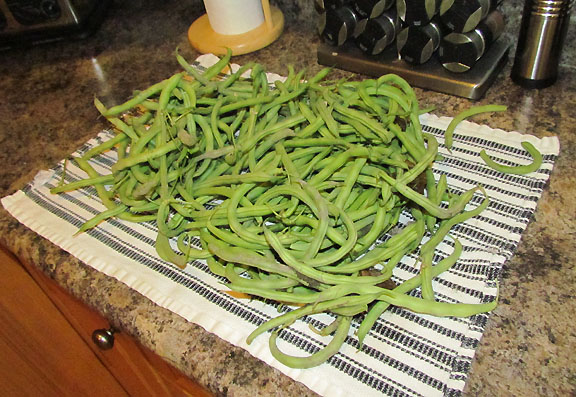
Green & Yellow Beans: The crop is now ripped up and in the composter after getting one last big pick.  There is enough beans canned to last us a year in the basement. Not sure if we need to plant so many next year as we had way more than enough.

Cabbage: The last of the cabbage is now picked.  Aaron made a sauerkraut which has been lacto fermenting for the past two weeks.  The cabbage shared the same field as the beans, which is now rototilled with spent mushroom substrate, from the local mushroom farm.  Phosphorus, nitrogen, potassium and calcium are also in the manure which will add to the soil for the squash that will be planted in that plot next year after we plant a cover crop.

Sauerkraut lacto-fermenting in one of Marianne's Grandmothers sauerkraut crock.
 
 Aaron skimming off the floaties at the top of the water in the sauerkraut mix


Tomatoes: With a soaking summer, followed by a dry spell, our tomatoes ended up getting blight. Fearful that we might loose the whole crop we decided to pick some of the green tomatoes, some of our hot Hungarian wax peppers, some of our onions, add some lemon juice, salt, pepper and basil, and made 16 jars of salsa verde.  In the end, we actually didn't loose the whole crop and with the romas and beef tomatoes that are now red, plus some of our peppers and onions, we made 18 jars of a more traditional salsa.  The last little round of rain we had made our cherry tomatoes split, so we just go out occasionally and pick them to eat off the vine. They are also a favourite treat of our chickens :D

 Blight in our tomatoes

Peppers: We used our bell peppers for ingredients in salsa, and salad. The Hungarian wax peppers which are ridiculously stupid hot to eat, are also a great addition to salsa. The habaneros, which are even more nuclear, will probably be used for ingredients or dried.

 Hungarian yellow hot wax peppers.  They are not hot they are painful!!!!

Sweet Corn: Continues to grow.  Definitely behind the local harvest this year.  Hopefully they will be ready in a few weeks, as we haven't even had the pleasure of the local stuff yet!

Sweet Corn

Potatoes: The small ones are all canned and the rest are sitting in the basement.  The section of the garden they were in is now rototilled with spent mushroom substrate.

Potatoes are no more

Lettuce, and Radish Mix: The last of the radishes have been picked and are now added to the occasional meal.  This section of the garden has since been rototilled with poultry manure as well.

Rutabagas: They are at the right size now to be harvested, however it is recommended that you leave them until after the first couple of frosts so that the sugars from the leaves gets forced into the root we eat to give it some sweetness.  We are now wondering if we planted them too early.

Don't let this photo fool you, this rutabaga is almost the size of a volleyball!

Carrots: We planted two rounds of carrots this year.  The first round has been picked and is being eaten occasionally while the second round will probably be ready in a few weeks.

Onions: All the onions have now been picked, and will be added to salsa, while the rest will be hung in the garage for future recipes.

Our onions, along with the last of this year's cabbage

Besides the garden, our chickens continue to explore the yard and all it's treasures of bugs and grasses.  The rooster has been crowing for the last couple of weeks and is now courting the hens.  None of the hens have laid any eggs yet. Hopefully in the next few weeks.

Our handsome cock


"What's supposed to come out of my bum?"
 

We left the milkweed in the back field for the monarch butterflies this year as we have a bumper crop of milkweed, and being classified as a noxious weed, there are not many milkweeds to begin with around the area.  This is the only food source of the Monarch Butterfly.  Unfortunately, there is not a good population of Monarchs this year.  It has been speculated that a late winter in the southern states put a huge dent in their population as they make their way north from Mexico, across the states and into Ontario.  We have only had a handful of Monarchs in our yard this year. 

A worn female Monarch Butterfly.  We saw her a few days after this photo was taken mating with a male.  Hopefully another generation of Monarchs will be added to this year's very low population.

With all the goldenrod in the backfield as well, we decided to mow it all down in hopes that only the grass will return.  Perhaps having less weeds will deter the ever present Japanese Beetles from having such a massive population in our yard.  We placed out three traps, and they have been really efficient at capturing these invasive insects.  For the most part, they have left our crops alone this year which is a relief.

Japanese Beetle Trap at the edge of the field.  The trap is basically a bag which you can open from the bottom to empty the beetles.  On the top of the bag is a pheromone lure to attract them.

Close up of a Japanese Beetle on the side of the trap.

Monday, August 5, 2013

WEEK #30 & #31: Pressure Canning

We tried our new pressure canner in the last couple of weeks.  We canned quite a few of our green and yellow beans, and most of our smaller potatoes from the huge harvest the other week.


With the zucchini taking over our lives, zucchini has been on the menu all week, zucchini lasagna was the best, we also made some zucchini relish.  Here is the recipe that Aaron used:

  1. Place 12 cups of shredded zucchini and 4 cups of onion in a large bowl, and sprinkle 5 tablespoons of pickling salt. Use your hands to evenly mix the salt throughout the zucchini. Cover, and refrigerate overnight.
  2. The following day, drain the zucchini in a colander, and rinse well with cool water. Squeeze out excess water and set aside. Chop two red bell pepper, add 5 cups sugar, 3 cups vinegar, and 1 tablespoon cornstarch into a large pot. Add 2 teaspoons celery seed and 1 teaspoon ground black pepper. Stir to combine, then add the drained zucchini. Bring to a boil over medium-high heat, then reduce the heat to medium-low, and simmer 30 minutes.
  3. Fill 8 x 500ml jars and can/process in a standard water bath for 30 minutes. 


From left to right: Pickled Beans, Zucchini Relish, and Canned Green and Yellow Beans

Canning potatoes was not fun.  Looking online Aaron found two sites that said you should can potatoes with the skins off, so we spent several hours trying to peel potatoes that were supposed to just 'slip off' after a good boiling.......they did not.....After several more hours of skinning potatoes, Aaron decided to look for a second opinion on the whole "skins on vs. skins off" debate.  Apparently, you don't necessarily have to remove the skins it just for aesthetic reasons......ughhhh.

Twenty six 1 litre jars of potatoes.  This is maybe 1/5th of the potatoes........ 

Thursday, July 25, 2013

WEEK 28 & 29: Holy Harvest Batman!


A typical pick in Week 28 has a little bit of everything :D

The garden has taken precedence over everything now, so we are combining two weeks into one blog post again as we haven't had a chance to do anything else but tend to our garden.  Our daily routine for the past two weeks seems to be the following:

5:00 am: Get up and have a breakfast. We enjoy having a nice relaxing breakfast together, so we always get up early to enjoy some quiet time together, watch the news and have a coffee.

6:00 am: Open up the chicken coop to let the chickens out and give them some food and water. After this is all done we go to work.  If it's a Saturday or Sunday, the chickens may not get let out until 7:00am.

During the day, we work in the garden, unless we are at work, then it is all done in the evening.  This includes weeding, picking veggies, pruning plants, and, because we actually had rain this summer, cut the lawn once a week.  If something gets harvested, then comes the decisions on what to do.  So far these past two weeks we have had a ton of peas, zucchini, beats, yellow and green beans, cabbage and potatoes.

We have finished our peas completely for this year. The only thing we ever did with them was eat them out of the pod and add them to our supper occasionally.

In the last two weeks we also pulled out all the beets.  We pickled 16 one litre jars with our whole crop. 

Our beets from our third and last pick from Week 29


Pickled beets recipe we used:

Pick the biggest beets, give the little guys room to grow

Trim tops, leaving ½ inch of leaves, do not trim “tail”

Rinse off dirt in sink

Boil for ½ hour in plenty of water

Drain and rinse well, cover in cold water and let soak 10 minutes

Peel and trim

Slice to ½ inch thick with mandolin slicer (8 cups of beets = 4 x 1 litre jars)

Slice 1 large onion very thin with mandolin slicer

Prepare brine – 5 cups vinegar, 2 cups water, 1 cup sugar, 4 tbsp coarse salt, 2 tbsp black peppercorn, 12 whole cloves, 1 cinnamon stick

Bring brine to low boil and simmer for 10 minutes

Sterilize clean jars in boiling water for 10 minutes

Heat canning lids in very hot water

Fill sterilized jars with beets and sliced onions to 1 inch from top

Pour pickling brine through sieve, filling jars to within ½ inch from top

Cover with lids and tighten rings to finger tight.

Place jars in canner with water just to top and process for ½ hour.

When done let cool for 24 hours, test lid for seal, remove rings and store in a dark cool place for up to 1 year.


We also dug up all our potatoes.  Needless to say we dug up enough potatoes  for a whole year easy.  We gave some away to family and friends as they will not last a whole year if it is just us two eating them.

The great potato pick of 2013 in Week 29.  Notice chicken in the background
 

I think we might have enough potatoes for a while

Our cabbage is coming along nicely.  So far we have picked around 6 heads.  Besides giving the cabbage to Marianne's Mom in hopes she will make coleslaw, we have also made our own coleslaw and added it to supper.

Every other day we are picking green and yellow beans.  In week 29, our second crop of yellow beans that we planted two weeks behind the first crop is starting to show as well.  We usually have beans with our meals but we have also given some away to family and pickled some as well.

Every other day we pick about this many beans.  I'm sure week 30 will be at least double if not triple this amount! 

Hot pickled dill beans recipe we used:

Grow way too many green ‘Blue Bush Beans’ and mix in some yellow wax beans for variety

Clean and trim 8 cups of beans so they are shorter than the 500ml canning jars standing up, makes about 8 x 500ml jars.

Prepare brine – 5 cups vinegar, 2 cups water, 1 tbsp crushed red pepper, 4 tbsp dill seed, 4 tbsp coarse salt, 6 cloves garlic cut in half

Bring brine to boil and simmer for 10 minutes

Sterilize clean jars in boiling water for 10 minutes

Heat canning lids in very hot water

Fill sterilized jars with beans

Remove garlic cloves from brine and fill jars to within ½ inch from top

Cover with lids and tighten rings to finger tight.

Place jars in canner with water just to top and process for 15 minutes.
When done let cool for 24 hours, test lid for seal, remove rings and store in a dark cool place for up to 1 year.

Our homemade pickled beets and pickled beans :)
 

Then there is the zucchini.  With nine plants, it is impossible to keep up with what is being produced.  We have made zuchinni bread to bring to Marianne's family reunion, shredded some that went into the freezer for later, added it to our meals, and given it away.  Even after all this, we still have tons of zucchini sitting on our counter.  Next year, we probably won't have to plant so many.

A single day's pick of zucchini in Week 29, with many more to come!

Other happenings around the farm include having around10 inches of rain this summer thus far.  I wish we actually kept track since we have a rain gauge, as it would be interesting to take note of the total rainfall and compare it to future years. The chickens are growing ever bolder of their surroundings.  We now open up their run so they can explore around the yard while we are at work.  In the evening they still return to the coop, except for the one we always have to fetch out of the small cedar tree.  We also have a mama turkey and seven little ones visiting us once in a while. :)

Mama turkey and chicks enjoy a cool dust bath after Aaron rototilled the garden where the potatoes once were.

Wednesday, July 10, 2013

WEEK 27: Garden Updates

One thing is for sure, we have never had this much rain here in Essex County since I can remember!  We easily had 6 inches of rain since we came home from vacation, and our vegetables are reacting and are growing like crazy!  We had our first cabbage this week, along with some peas and zucchini.  Ours roma tomatoes from Aaron's mom have tomatoes now as well.

 
Peas

 
Romas

 
Zucchinis


Sticky cards in our tomatoes

We also hung up some sticky cards in the gardens to see what they catch.  So far just the occasional thrips, leafhopper, aphids, and some unfortunate European Skippers.

Lettuce continues to grow, but the heat is making them taste quite bitter.  They don't go to waste however...the chickens love it!

With last week's heat and humidity, along with all the rain, our squash seems to be getting some angular leaf spot which is a bacteria disease that thrives in these conditions.  Aaron picked up some copper spray bactericide at Home Hardware to spray on the four plants that looked to be infected. 

We are very surprised we haven't seen much powdery mildew as it's in our weeds along the fence line.

Tuesday, July 2, 2013

WEEK 26: Insects

Decided to get some photos this week of some of the insects that feed on the plants, along with the beneficial insects that feed on them.  Here is a collection of photos that Marianne took.

 
Aphids on Goldenrod.  You can see the Ladybug that in turn preys upon them.
 
 
Close up of an adult aphid
 
 
Adult Ladybug.
 
 
Adult Lacewing.  The adult itself doesn't feed on aphids, but instead feeds on the honeydew that the aphids secrete.  The adult lacewing will then lay her eggs among the aphids.  When the larvae hatch, they in turn prey upon the aphids.
 
 
Lacewing larva.  Completely different looking from the adult.  Kind of an ugly duckling to the beautiful swan.  With those deadly pinchers, this lacewing larva feeds on aphids and anything else that it finds edible
 
 
Silver-spotted Skipper.  Though the Lepidoptera are not really wanted in the garden as the caterpillars feed on the leaves of your crops, the adult butterflies add colour to the garden.  This one is on Cow's Vetch, which to some, is just another weed.
 

European Skipper.  This butterfly, no bigger than the size of your thumb nail, was accidentally introduced into North American near London, Ontario.  Now they are a very common sight in the mid west.